
On the street
How to ask a stranger for a portrait (and what to say when they ask why)
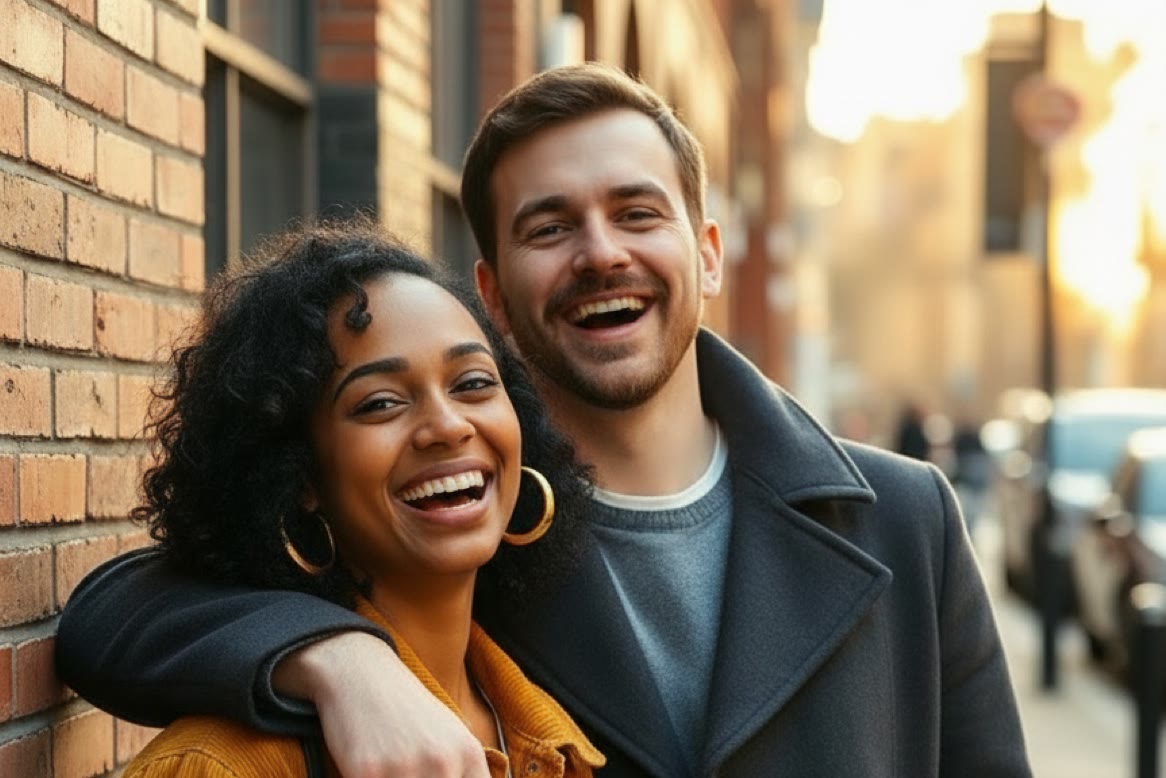
The asking is harder than the photograph. Everyone who shoots portraits of strangers says the same thing, and the people who are good at it are not braver, they just stopped improvising. They say the same fifteen words every time, they stand in the same place, and they know what happens after the yes.
Before you open your mouth
Decide in the first second, then walk. The gap between noticing someone and approaching them is where the nerves live. Two seconds of hesitation reads as hesitation; the person has already seen you look. Walk over with the camera visible and down at your side, not raised. Stop a little further away than a conversation, about two metres, slightly to one side so you are not blocking their path.
The line
Short, specific, and with a reason in it. Something like:
"Hi. I'm shooting portraits of people on this street today, and that coat is exactly what I'm after. Can I take one? It takes twenty seconds and I'll give you the photo right now."
Three things are doing the work. Specific: the coat, the hat, the bike, the dog. A real reason tells them they were chosen, not harvested. Bounded: twenty seconds. People say yes to small things. Give: they get something. Most people have been photographed on the street before and never seen the result. Promising the photo, and meaning it, changes the whole expression on their face.
Then stop talking. The pause after the ask is theirs. Fill it and you are negotiating.
When they ask why
Have a true answer that fits in one breath. "It's a personal project, portraits of this neighbourhood." Or "I'm a photographer, this is how I practise." Or "I just liked how you looked walking past." All three are honest and all three work. The one that does not work is a vague "for my portfolio", because it answers a different question.
If they ask what you will do with it, tell them, and keep it small: "It goes to you, and maybe on my Instagram. I'll show you first." If they do not want it posted, that is the deal. The release guide covers what you can and cannot do with a street portrait afterwards.
The no
"No worries, have a good one." Smile, step back, and mean it. A gracious no is the thing the next three people on the street will notice. Never ask twice, never explain more, and never photograph them anyway. About one in three will say no on a normal day. The rate is not about you.
The twenty seconds
- Move them two steps if the light is bad. "Just here, the light's better." People like being directed; it means you know what you are doing.
- Camera up, one shot straight away, before they have arranged their face. It is often the one.
- Say one thing. "Look just over my shoulder." "Don't smile, actually." "That's it." Then two or three more shots.
- Say thank you and lower the camera. Twenty seconds is twenty seconds.
Settings for all of this are in street portrait camera settings: short version, aperture priority around f/2.8 to f/4, a minimum shutter speed of 1/250, Auto ISO, eye detection on.
The part everyone skips: handing it over
This is where the promise gets kept, and it is where most photographers fall apart. "I'll email it to you" means a scrap of paper, a mistyped address, and a photo sent three weeks later to someone who has forgotten you. The people who get portraits every day have a way to deliver on the spot.
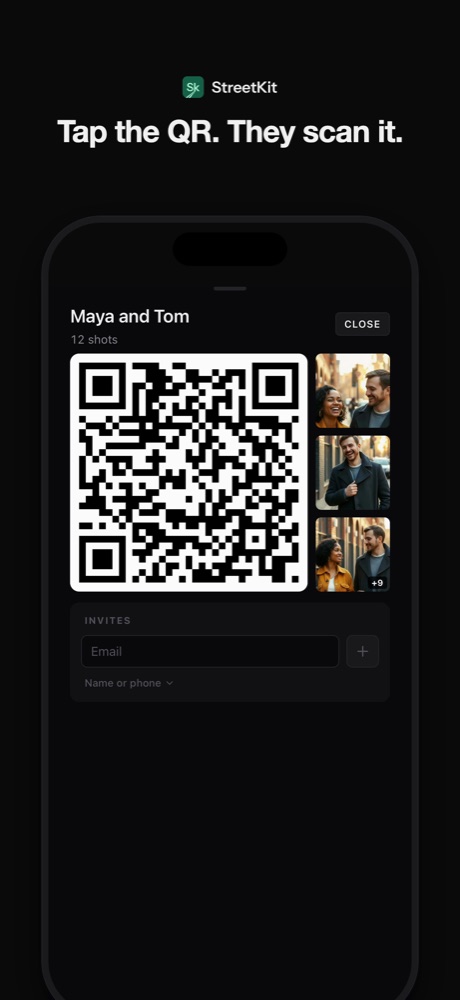
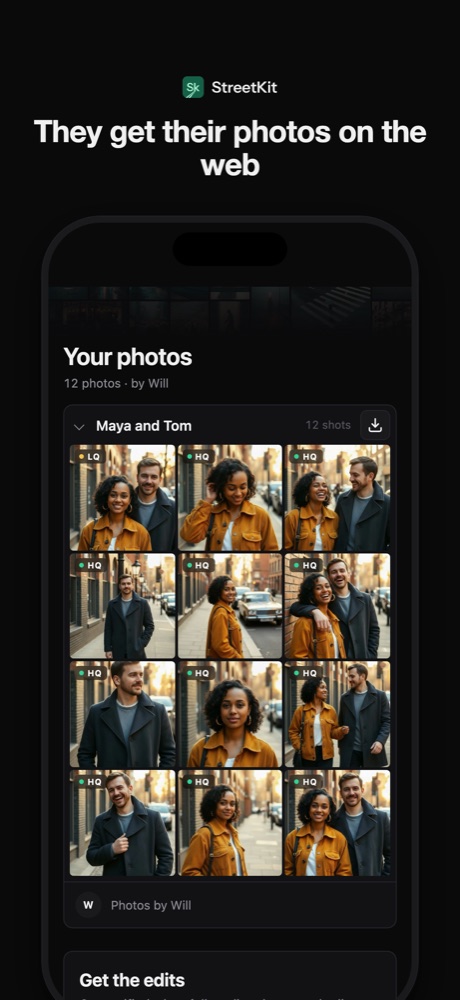
With StreetKit the camera is plugged into the phone, so the shots are already on it. You tap the group, a QR code comes up, they point their own phone at it, and a page opens with their photos. No app, no typing, no "what's your email". They walk off with the pictures. If they want the edited versions later they leave an email on that page, and you have a name to go with the face.
Without it, the next best thing is AirDrop on the spot, which works between iPhones and takes about a minute of fiddling, or a text message with the phone photo of the back of your camera, which is better than nothing. The sending guide compares the options honestly.
Things that make the yes more likely
- Look like a photographer. A real camera on a strap does more than any sentence. A phone pointed at someone reads as surveillance; a Canon reads as a project.
- Ask people who are stopped. Waiting for a bus, outside a shop, sitting on a wall. Someone mid-stride has somewhere to be.
- Ask pairs. Two friends say yes more than one person alone, and the photo of them together is usually better.
- Go when the light is good. The hour before sunset makes everyone look like a film still, and people can feel it. They are in a better mood and so are you.
- Do it ten times. The first ask of the day is the worst one. By the fourth it is a conversation.
Questions people ask
Is it legal to photograph strangers in public?
In the United States, the United Kingdom and most of Europe, photographing people in a public place is legal, and asking first is a courtesy, not a legal step. Publishing the photo commercially (an advert, a product) is a different matter. The model release guide has the detail, and it is not legal advice.
What if they want to see the photo before saying yes to it?
Show them. The back of the camera, or the phone if the shot is already there. People who see a good picture of themselves stop worrying about it.
Should I offer to pay or to send prints?
No to paying; it changes the relationship and most people find it odd. Yes to the photo, immediately, and if you later make a print, offering it is a lovely gesture that people remember.
Keep reading
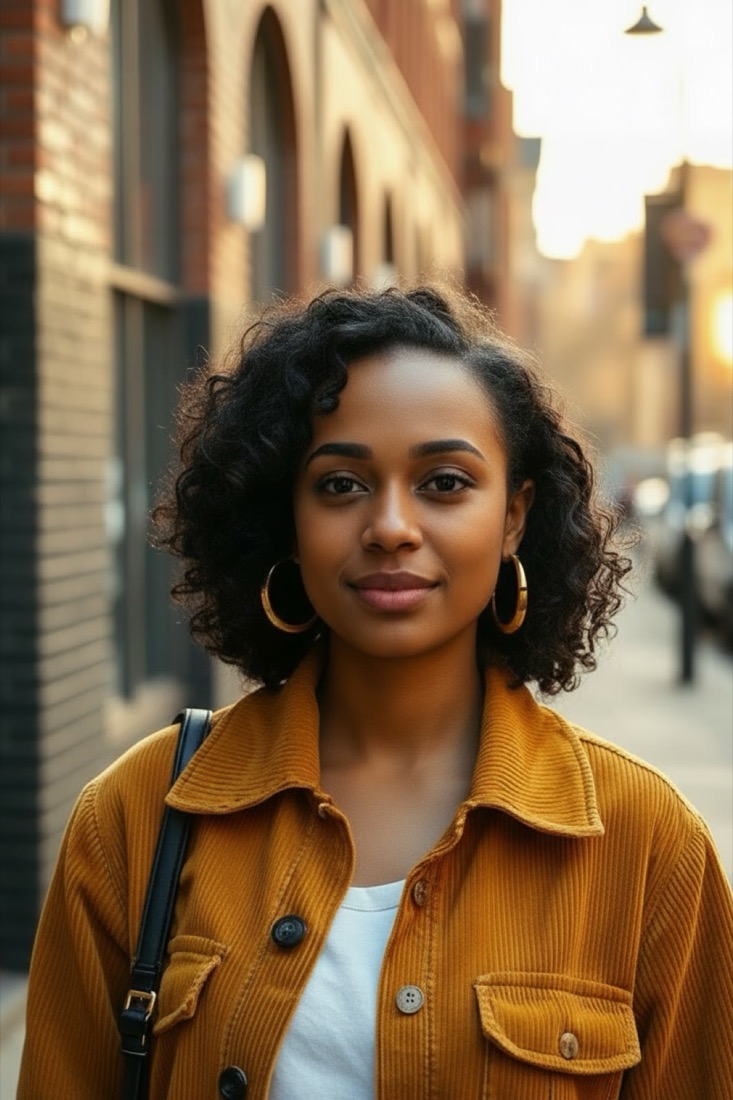 On the street
Street portrait camera settings that work in twenty seconds
Av at f/2.8 to f/4, 1/250 minimum, Auto ISO, eye detection on. Why, and where it is in the Canon menu.
On the street
Street portrait camera settings that work in twenty seconds
Av at f/2.8 to f/4, 1/250 minimum, Auto ISO, eye detection on. Why, and where it is in the Canon menu.
 Sharing photos
How to send people the photos you took of them (without losing half of them)
AirDrop, text, Dropbox, a gallery, or a QR code on the spot. What each one costs and who actually gets their photo.
Sharing photos
How to send people the photos you took of them (without losing half of them)
AirDrop, text, Dropbox, a gallery, or a QR code on the spot. What each one costs and who actually gets their photo.
 On the street
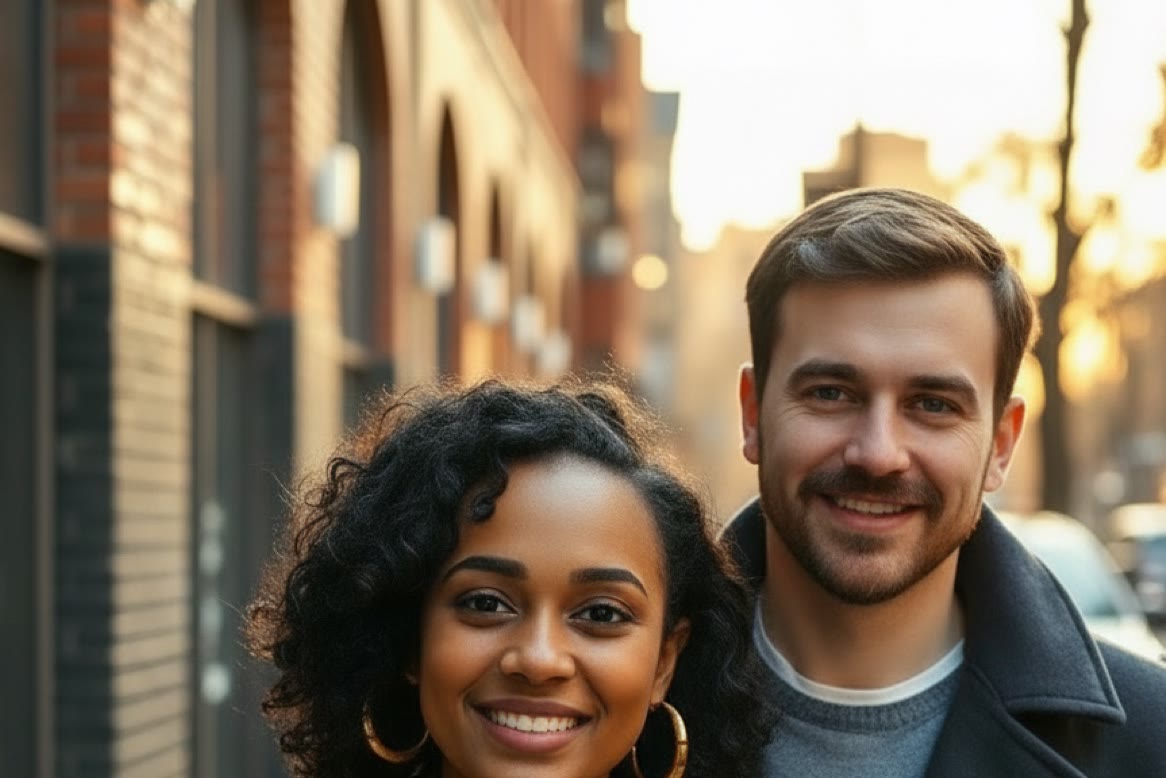
Do you need a model release for a street portrait?
Usually no, sometimes yes. Personal, editorial and commercial use in plain words, plus a release short enough to sign on a pavement.
On the street
Do you need a model release for a street portrait?
Usually no, sometimes yes. Personal, editorial and commercial use in plain words, plus a release short enough to sign on a pavement.
 On the street
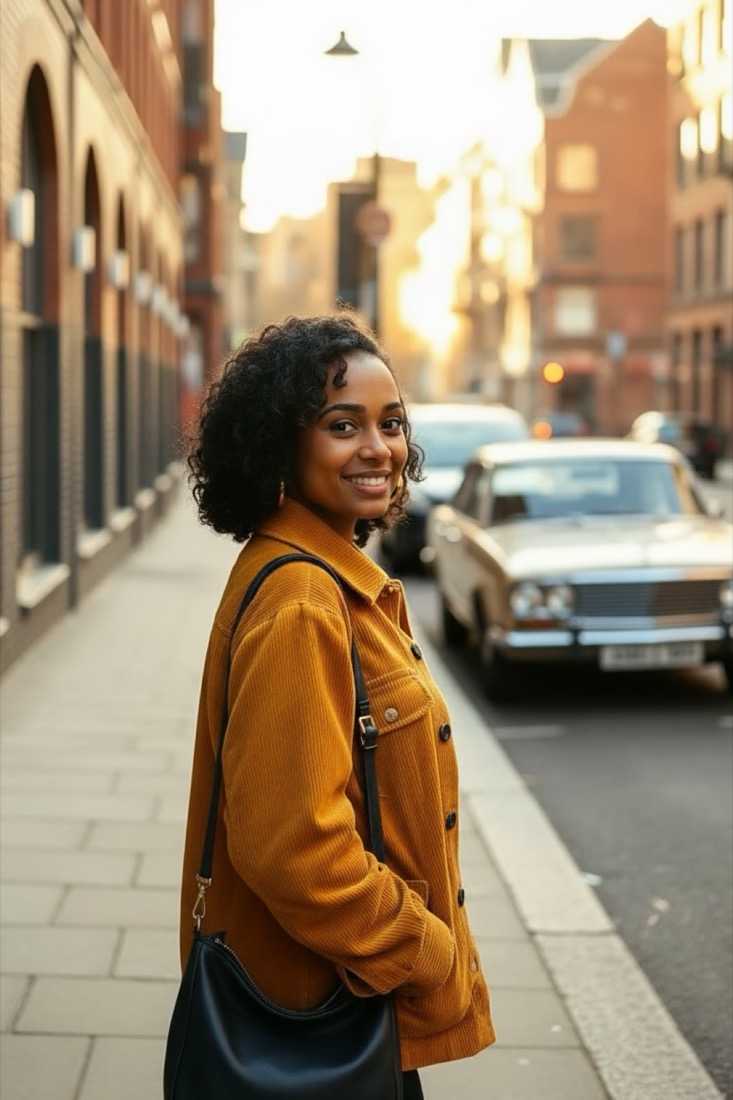
Street photography for beginners: the first ten walks
Not a list of tips. One lens, one setting, one street, and a small goal for each of the first ten walks.
On the street
Street photography for beginners: the first ten walks
Not a list of tips. One lens, one setting, one street, and a small goal for each of the first ten walks.